
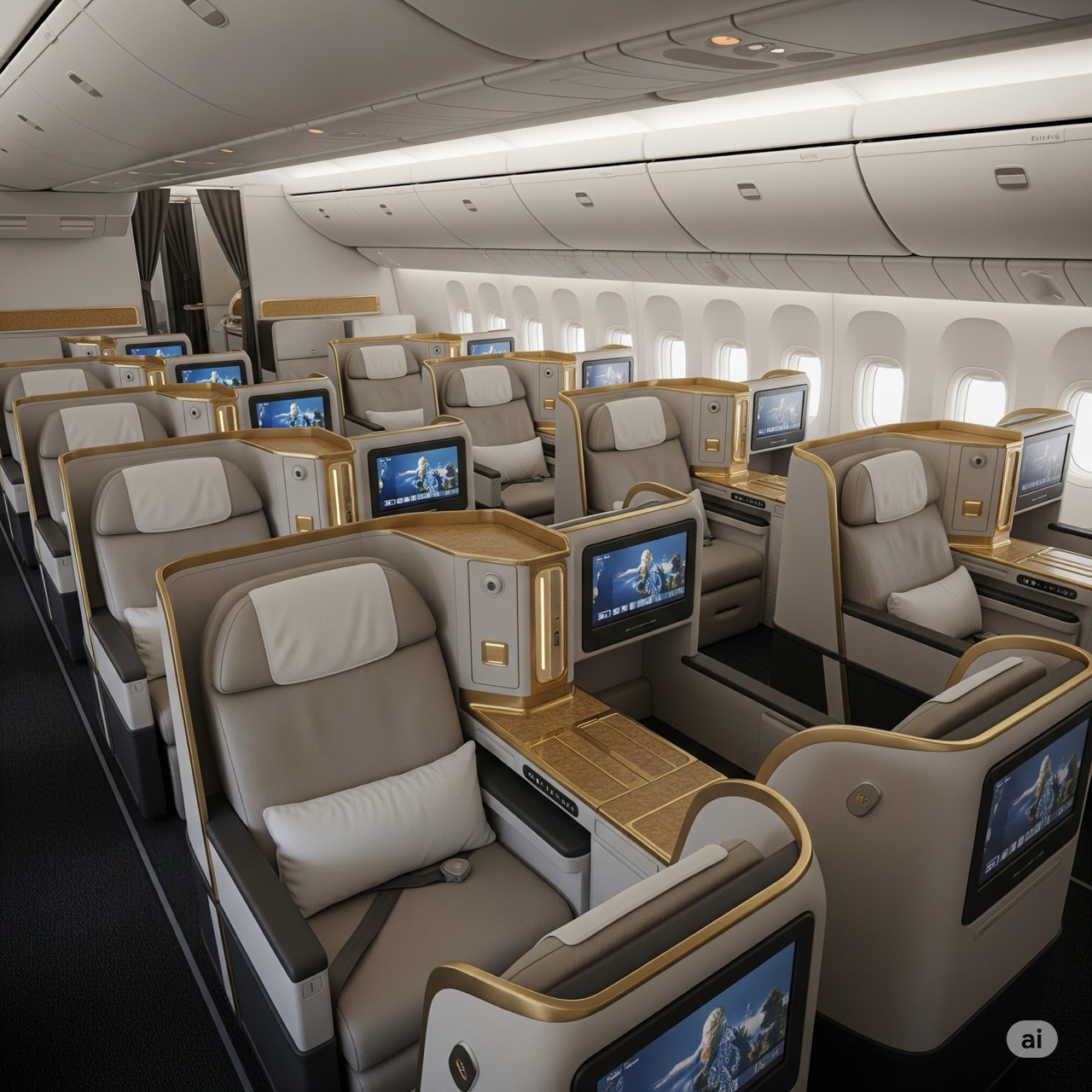
What APD actually costs in Business Class
Air Passenger Duty is a UK tax levied on the operator for each passenger departing a UK airport. It is banded by distance and by cabin: the long-haul "higher rate" — which applies to most Business and First Class tickets — is well over £190 per passenger, and an ultra-long-haul band adds more. The Government revises the rates every April, so always check the current figure.
Crucially, APD is only charged on departure from the UK. A flight arriving into the UK pays nothing, and a long-haul flight that starts outside the UK pays no UK APD — which is the basis of every legitimate reduction strategy.
The Dublin routing
The most popular method is to begin the long-haul Business Class journey in Dublin, where Ireland charges no departure tax. You position from the UK to Dublin on a short, cheap flight (often in economy), then fly Business Class from Dublin to the US or beyond. Because the taxed UK segment is now a short-haul economy hop, the APD on it is minimal, and the long-haul Business leg carries no UK APD at all.
Dublin has the added advantage of US Customs and Border Protection preclearance, so you arrive in the US as a domestic passenger. The trade-off is the extra connection and the need to allow enough time — and to understand that a self-connection on separate tickets carries its own risk if the first flight is delayed.
Regional exemptions and split-ticketing
Airports in the Scottish Highlands & Islands — Inverness among them — carry a long-standing APD exemption, so departures from there are not charged the duty. For travellers in the north of Scotland this can remove APD without leaving the UK.
Split-ticketing works on the same principle as the Dublin routing without changing country: you book the short UK feeder separately (in a low cabin, low APD band) from the long-haul Business fare originating abroad. It needs care to keep the connection legal and protected, which is exactly the kind of itinerary a dedicated advisor builds and prices end to end in GBP.